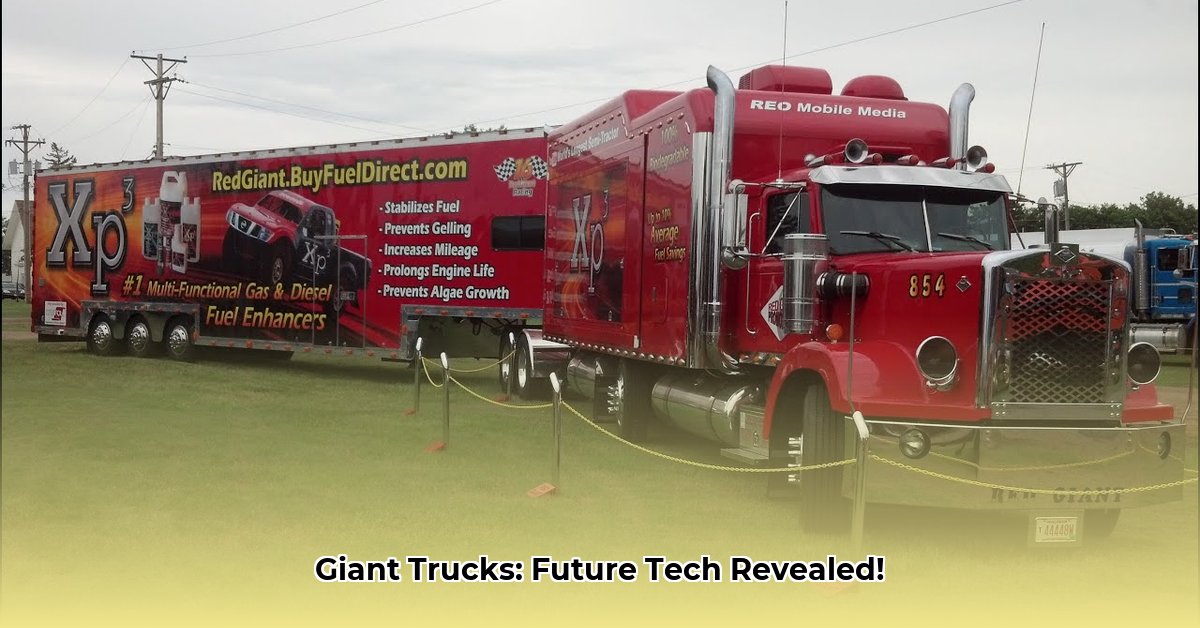
The world of heavy-haul trucking is a fascinating blend of raw power and cutting-edge innovation. Imagine moving colossal loads—skyscraper components, massive mining equipment, entire houses—across vast distances. This isn't your average delivery; we're talking specialized vehicles handling truly incredible weights. For more details on the largest trucks, check out this comprehensive guide. Let's explore the current giants and the promising, yet challenging, future of this industry.
The Heavyweight Champion: Tractomas TR 10x10 – A True Beast
Currently, the undisputed king is the Tractomas TR 10x10. This isn't just a truck; it’s a mobile mountain. Even empty, it weighs a staggering 40 tons (80,000 pounds)! Its hauling capacity is a mind-bending 700 tons—the weight of hundreds of cars. Its niche applications are in specialized roles such as open-pit mines (moving vast quantities of ore) and transporting exceptionally large cargo. It’s a marvel of engineering, but this power comes at a cost—fuel efficiency remains a significant challenge. What are the trade-offs of such immense hauling capacity?
A Glimpse into the Future: Nikola One and Similar Aspirations
Let's shift gears to the future, or at least, what was envisioned. The Nikola One, while ultimately unsuccessful, represented a revolutionary concept. This electric-hybrid powerhouse boasted a projected 2,000-horsepower engine—enough to pull a small train! The idea? Use natural gas to generate electricity, drastically improving fuel efficiency and slashing emissions compared to traditional diesel behemoths. Think of it as a diesel-electric locomotive, but on wheels. However, the Nikola One's story highlights the challenges of translating great ideas into reality. Regulatory hurdles and a complete lack of supporting infrastructure proved insurmountable obstacles. This underscores the necessity of both technological innovation and supportive infrastructure for widespread adoption. Similar projects, employing alternative fuel systems or electric power, face similar challenges today.
Comparing Titans: A Head-to-Head Look
Let's compare the current champion and the ambitious, albeit ultimately failed, challenger:
| Feature | Tractomas TR 10x10 | Nikola One (Proposed) |
|---|---|---|
| Payload Capacity | 700 tons | (N/A; Projected to be comparable or potentially slightly lower due to efficiency designs) |
| Fuel Efficiency | Very Low | Projected to be Significantly Improved |
| Emissions | High | Projected to be Lower |
| Technology Maturity | Proven and Established | Unproven and largely experimental |
| Operational Cost | Extremely high | Potentially Lower |
Industry Winds of Change: Trends Shaping the Future
The heavy-haul trucking industry is dynamic. Key forces are driving change:
- Sustainability: Stricter environmental regulations are pushing for cleaner, more efficient solutions.
- Automation: Self-driving trucks are likely to play a larger role, even in heavy-haul.
- Alternative Fuels: Natural gas, hydrogen fuel cells, and improved electric batteries are gaining traction, aiming to reduce diesel dependence. The goal? Balancing massive cargo transport with environmental responsibility and cost-effectiveness. Is the transition to sustainable heavy-haul inevitable, or will significant obstacles remain?
Challenges on the Road Ahead: Obstacles and Opportunities
Several roadblocks remain:
- Infrastructure Development: Building infrastructure for alternative fuels is expensive and complex.
- Regulation: Navigating government regulations can be slow and challenging.
- High Initial Costs: The high initial cost of advanced vehicles is a significant barrier for many companies.
However, these challenges offer opportunities:
- Public-Private Partnerships: Collaboration could ease the burden of infrastructure development.
- Government Incentives: Incentives can encourage the adoption of cleaner technologies.
- Technological Advancements: Better batteries could significantly improve the range and efficiency of electric trucks.
The Future of Largest Tractor Trailers: A Road Map to Sustainability
The future of heavy-haul trucking is full of potential. Increased fuel efficiency and reduced emissions are likely. Automation will likely improve operations and safety. This transition requires collaboration between governments, industry, and researchers. The ultimate goal is a future where moving massive payloads doesn't harm our planet. What innovative solutions will bridge the gap between immense capacity and environmental stewardship?
Core Insights:
- The Tractomas TR 10x10 represents the current pinnacle of heavy-haul capability, but its fuel efficiency and environmental impact are significant drawbacks.
- The Nikola One, while ultimately unsuccessful, demonstrated the potential of alternative fuel technologies in heavy-haul trucking, but highlighted the importance of supportive infrastructure.
- The future of heavy-haul trucking depends on overcoming challenges related to infrastructure development, regulatory hurdles, and the high initial cost of advanced technologies.